Signs a spring has broken
| What you notice | Likely cause | Safe to use the door? | What to do |
|---|---|---|---|
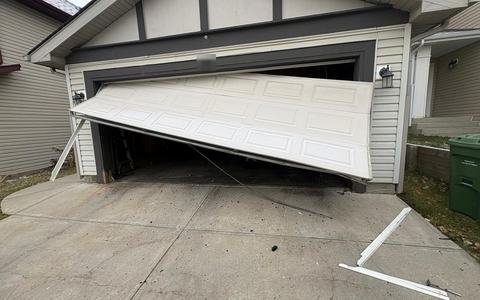
| A loud bang from the garage, often when nobody was using the door | A torsion spring has snapped while under tension | No | Leave the door where it is and call us |
| The door lifts a few inches, then stops or reverses | The opener can't lift the door's weight without the spring | No | Don't press the button again; it strains the opener |
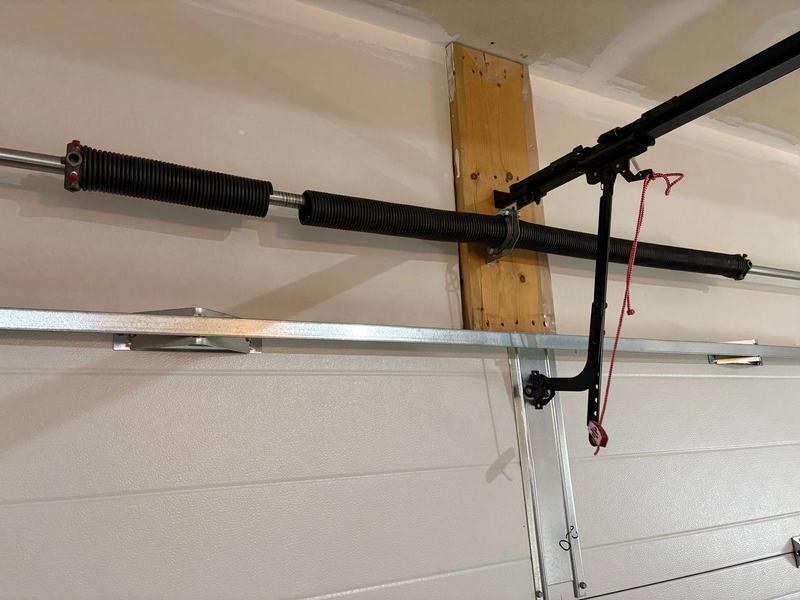
| A visible gap in one of the springs above the door | The spring has broken into two pieces | No | Call for a spring replacement |
| The opener hums or strains and the door barely moves | Broken or badly worn spring | No | Unplug the opener and call us |
| The spring looks wavy or 'snaky' instead of tightly wound | The spring is near the end of its life | With caution | Ask about replacing it before it breaks and damages other parts |
How a torsion spring system works
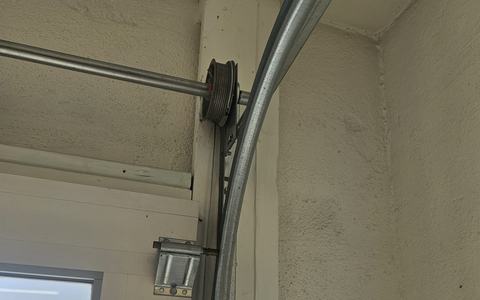
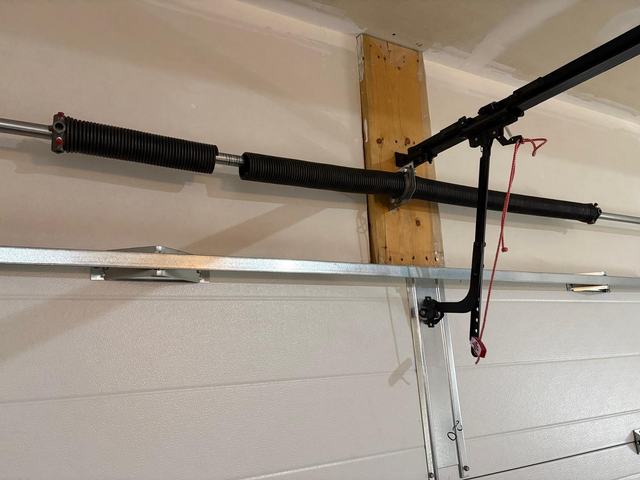
A garage door is heavy, and the opener isn't meant to lift it alone. The springs do the lifting. Torsion springs sit on a steel shaft above the door and are wound tight to store energy. As the door opens, they unwind and turn the cable drums at each end of the shaft, and the lift cables raise the door from the bottom brackets. When a spring breaks, that lifting force is gone.
Spring setups we see in Calgary garages
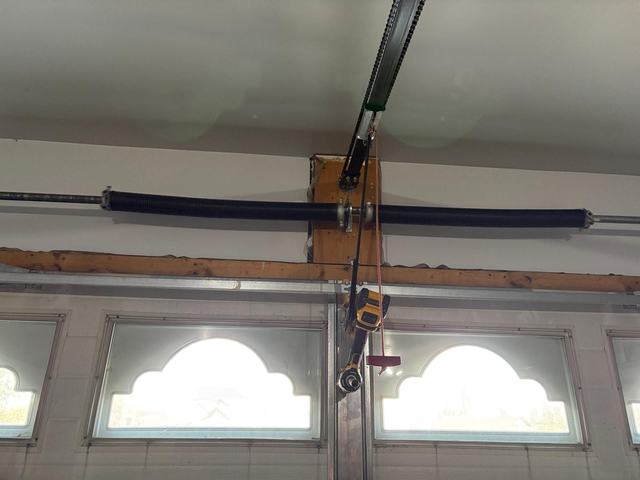
- Double torsion springs: the most common setup on two-car doors. One spring on each side of a centre bearing.
- Single torsion spring: found on some lighter and single-car doors.
- Four torsion springs: used on heavier doors that need more lifting force.
- Wayne Dalton TorqueMaster: springs enclosed inside a tube. When these fail, we convert the door to a standard torsion spring system.
Why we replace both springs
On a two-spring door, both springs have opened and closed the door the same number of times. Springs are rated for a number of cycles, so when the first one breaks, the second one usually isn't far behind. Replacing both together keeps the door balanced and saves you a second service call a few weeks later. The exception is when one spring was replaced recently. In that case we'll tell you, and only replace what needs replacing.
How long garage door springs last
Standard springs are rated for about 10,000 to 12,000 cycles. One cycle is one opening and one closing. A household that opens and closes the door three or four times a day uses roughly 1,100 to 1,500 cycles a year, so for most homes standard springs last on average 8 to 10 years.
If your garage is the main way in and out of the house, and the door opens many times a day, we recommend upgrading to high-cycle springs, which are built for far more cycles and last much longer on a busy door.
Does Calgary's weather break springs?
Big temperature swings, like a cold snap or a chinook, don't break a spring that's in good condition. But when a spring is already worn and close to the end of its life, a sharp change in temperature can be what finally makes it give. That's why we often see a run of broken springs during swings in the weather.
Can you tell a spring is about to break?
Usually not. Most springs give no warning and simply break when they reach the end of their cycle life, so most homeowners only replace them once they've broken. There are two exceptions:
- The spring looks wavy or 'snaky'. This usually means it will break soon. Replacing it first can prevent damage to other parts of the door.
- Counting cycles. From the spring's size and the door's weight we know how many cycles it's rated for. Some openers keep a count of cycles, so we can estimate how much life is left and replace the springs before they break if you'd rather not wait.
Problems we often find on other installations
The most common problems we find are springs of the wrong size for the door, and doors that are out of level and out of balance. A door that isn't balanced makes the opener do work the springs should be doing, and wears out parts sooner. We size every spring to your door and check the balance and level as part of every spring replacement.
What happens during a spring replacement
Measure and assess
We measure the door and the existing springs to work out the correct spring size for your door.
Confirm the price
We tell you the exact cost before any work begins. Nothing starts without your approval.
Remove the old springs
We safely release the tension, remove the cables and take down the old springs.
Install the new springs
We install the new springs, set the cables and wind the springs to the right tension.
Balance and lubricate
We test the door's balance and lubricate the moving parts.
Check the whole door
We inspect the rest of the door for worn, faulty or rusty parts and let you know what we find.
Final test
We run the door several times and triple-check that everything works properly before we leave.
Canadian-made springs
We install Canadian-made springs. As a Canadian business we like supporting the local economy, and these springs are made from top-quality steel so you get the full rated life out of them.
Spring replacement prices
| Pair of standard torsion springsBoth springs replaced, door balanced and tested | $380–$480 |
|---|---|
| Single torsion spring (one-spring door) | $250–$320 |
| Heavy or oversized door springs (pair)Heavier wire for tall, wide or heavy doors | $480–$650 |
| High-cycle spring upgrade (pair)Longer-life springs for busy garages | $550–$750 |
| Extension springs (pair) with safety cables | $250–$350 |
Prices include parts and labour. GST is extra. There is no service-call fee, and we confirm the exact price before any work begins. Prices reviewed November 2026.
Spring replacement questions
Can I open my garage door with a broken spring?
No. Don't try to open it again with the opener or by hand. The opener isn't built to lift the door's full weight, and forcing it can damage the door's hardware and the opener. Call us and we'll take it from there.
Should both springs be replaced if only one broke?
Yes, in almost every case. Both springs have done the same number of cycles, so the second usually breaks soon after the first. The exception is if one spring was replaced recently.
How long will new springs last?
Standard springs are rated for about 10,000 to 12,000 cycles, which is roughly 8 to 10 years for most households. High-cycle springs last much longer and are worth it if the garage is your main entrance.
Do you work on Wayne Dalton TorqueMaster doors?
Yes. When a TorqueMaster spring fails, we convert the door to a standard torsion spring system.
Is there a service-call fee?
No. There's no service-call fee. We confirm the price before any work begins.
Is there a warranty on new springs?
Yes. Springs we supply and install are covered for 2 years.
Broken spring? Call us before you try the door again.
Call us, or send a request and we'll call you back. No service-call fee.